Yearly Archives: 2015
Review: Vuorensaku Custom Pickups S. Kamiina set

Not all custom pickups are created equal.
Most custom winders seem to be on the hunt for the “ultimate vintage experience”, whatever that really means. Those makers try to source the most vintage-correct materials and try to zone in on the right way to bring their pickups to the desired authentic NOS specifications. For a Fender Stratocaster this could mean either going for a dry and woody Fifties-style tone or for a juicier and grittier Sixties version.
Vuorensaku’s Saku Vuori fearlessly approaches the subject of custom pickups from a different angle. The result is a pickup set with a refreshingly personal sound that isn’t frantically trying to reclaim past glories.
The Vuorensaku S. Kamiina set’s (prices starting at around 200 €) is based on thicker magnet wire, compared to what an original Fender pickup uses. The S. Kamiina set is wound using 40 AWG gauged wire, while most classic Fender creations use 42 AWG wire (except the Telecaster’s neck pickup, which is wound with a thinner 43 AWG wire). The thicker wire in the S. Kamiina set is complemented with Alnico II magnets, which are a milder type of magnet than Fender’s preferred Alnico V variety.
Vuorensaku’s set includes a reverse wound/reverse polarity middle pickup, resulting in hum-cancelling switch positions two and five. The set’s bridge pickup has received a few extra windings for a little bit of extra output.
In terms of its electronic values the Vuorensaku set clearly differs from your traditional Strat pickups:
The resistance of a regular Stratocaster singlecoil lies in the ballpark of around six kilo-ohms, with a typical inductance of 2,3-2,4 henries. The pickups in the S. Kamiina set read 2,2 kΩ for resistance (bridge pickup: 2,3 kΩ) with an inductance of two henries.
Judging by these numbers only, we can surmise that the Vuorensaku pickup set will probably sound brighter than a traditional vintage Strat set, while also having a slightly lower output.
****

Saku Vuori was kind enough to provide a S. Kamiina-equipped Classic Series Fender 70s Stratocaster for this review. The guitar has an ash body, as well as a maple neck with a maple fingerboard. For comparisons I used my own Fender Japan Stratocaster with one-piece maple neck and an alder body.
I was right in expecting the Vuorensaku set to sound brighter than most vintage-style Stratocaster pickups, but the supposed drop in output level is of a more theoretical nature than of real practical importance. The S. Kamiina set imbues the 70s Reissue with a very cool Gretsch- or Rickenbacker-type jangly tone and grit. The Vuorensaku pickups also feature a cleaner lower mid-range, when compared to traditional Stratocaster pickups.
For comparison purposes the first (neck pickup) and last (bridge pickup) phrases of the sound clip have been played using my own vintage-style Strat, while the five phrases in between have been recorded with the S. Kamiina set (starting with the neck pickup):
The presence lift in the Vuorensaku set is also easy to spot in distorted sounds. The S. Kamiina’s delivery is a bit more aggressive and in-yer-face, which isn’t a bad thing at all.
For comparison purposes the first (neck pickup) and last (bridge pickup) phrases of the sound clip have been played using my own vintage-style Strat, while the five phrases in between have been recorded with the S. Kamiina set (starting with the neck pickup):
The demo song contains four guitar tracks:
• two rhythm guitar parts – left channel: neck and middle pickup; right channel: neck pickups
• a mystically floating backing guitar: middle and bridge pickup
• lead guitar: neck pickup with the tone control turned halfway down
****

If you’re an stickler for authentic vintage specs, the Vuorensaku S. Kamiina set probably isn’t what you’re looking for – these pickups are no mere vintage clones.
If you’re after a brighter tone, though, especially if you dislike the neutrality of many active pickups, the S. Kamiina set is definitely one to check out! Vuorensaku’s pickups will breathe life into a dark-sounding guitar, while also giving your controls a wider tonal range to work with. These are pickups that won’t mush up.
By the way:
Saku Vuori applies his “low output principle” to other Vuorensaku pickups, too, like the Telecaster- and P-90-style pickups he uses in his handcrafted Vuorensaku T. Family guitar models.
****
Vuorensaku Custom Pickups S. Kamiina set
Stratocaster sets start from 200 €
Additional options: pickup cover, relicing
Contact: Vuorensaku
****
Pros:
+ handmade in Finland
+ original sound, no vintage copies
+ rw/rp middle pickup
Review: PRS SE Custom 24 30th Anniversary

Thirty years ago a young, bespectacled man introduced the guitar-playing world to the first guitar model from his new company at the NAMM Show. The company from Maryland was only a small start-up, but their beautiful new electric guitar already started to attract a good deal of attention.
This young man was none other than Paul Reed Smith, the company PRS Guitars, and their first model the now-legendary Custom 24.
Before founding PRS Guitars, Smith had already managed to sell several of his handmade guitars to well-known guitarists, such as Howard Leese and Carlos Santana. Smith’s early guitars were clearly grounded in Gibson-tradition, successfully blending classic Les Paul Standard visuals with the more practical double-cut design of late 1950s Les Paul Specials. Carlos Santana’s signature PRS is based on these early (pre-PRS) guitars.
Nonetheless, Paul Reed Smith wasn’t content with high-class “copying”. He wanted to come up with the ultimate electric guitar, both in terms of playability and sounds. What he came up with was a guitar that successfully bridges the gap between Fender and Gibson electrics, without copying any of their classic models.
The first step on Paul Reed Smith’s ongoing quest for excellence was the PRS Custom 24, introduced at NAMM in 1985.
This guitar set PRS’ wheels a-rollin’, and the company has come a long way from its humble beginnings. These days people talk about the “Big Three” manufacturers of electric guitars – meaning Fender, Gibson and PRS.
To celebrate their anniversary PRS have released four limited edition models. Kitarablogi.com managed to get hold of the Made-in-Korea SE Custom 24 30th Anniversary for this review.
****

The PRS SE 30th Anniversary Custom 24 (current price in Finland approx. 1,000 €) is the most-affordable of the anniversary models, but it still is a great-looking guitar.
It has PRS Guitars’ typical scale length of 25-inches (63.5 cm), which is longer than Gibson’s, but shorter than Fender’s typically used scale lengths.
The back of the body is made from mahogany, while the curved top is crafted from maple. To spruce up the looks of the SE 30th Anniversary, a thin flame maple veneer is glued onto the (plain) maple top. The top is bound with cream-coloured plastic.
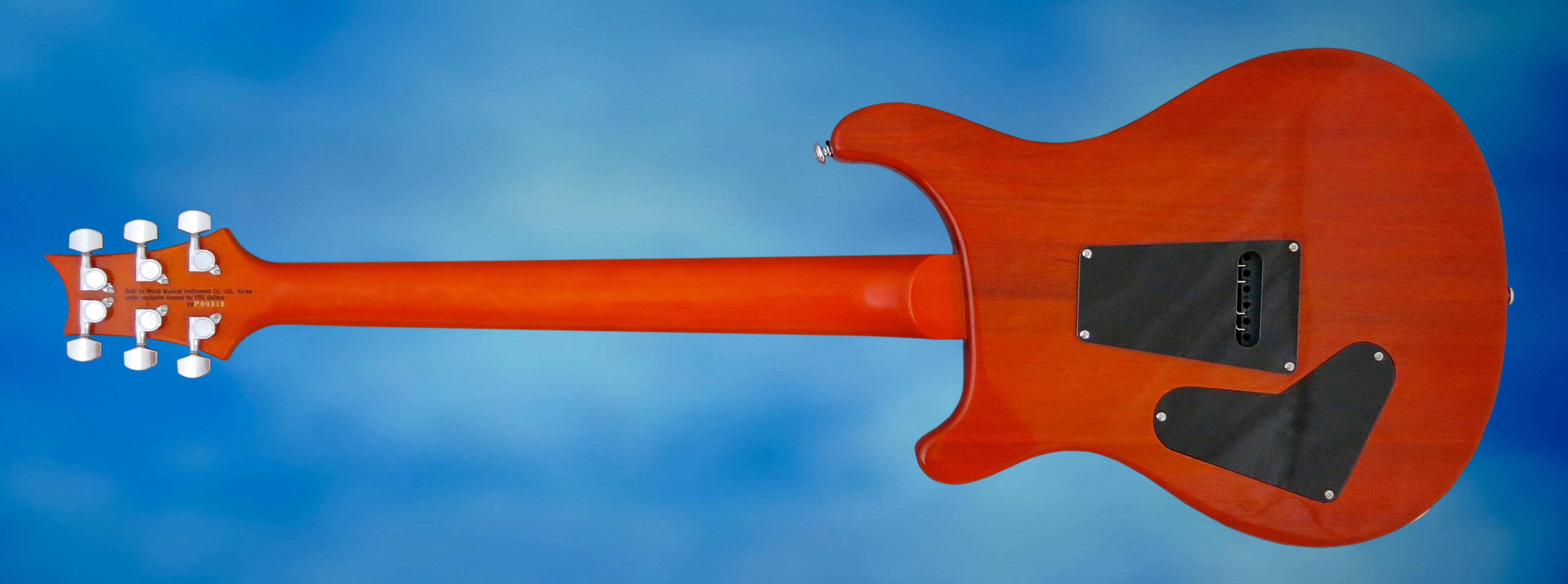
On current SE Custom 24 guitars the neck is made from maple – in contrast to the mahogany necks on US-produced Customs. The change was made recently for both tonal and ecological reasons. The SE’s set neck is glued together from three long strips of maple, with two small pieces added to get the headstock to its full width.
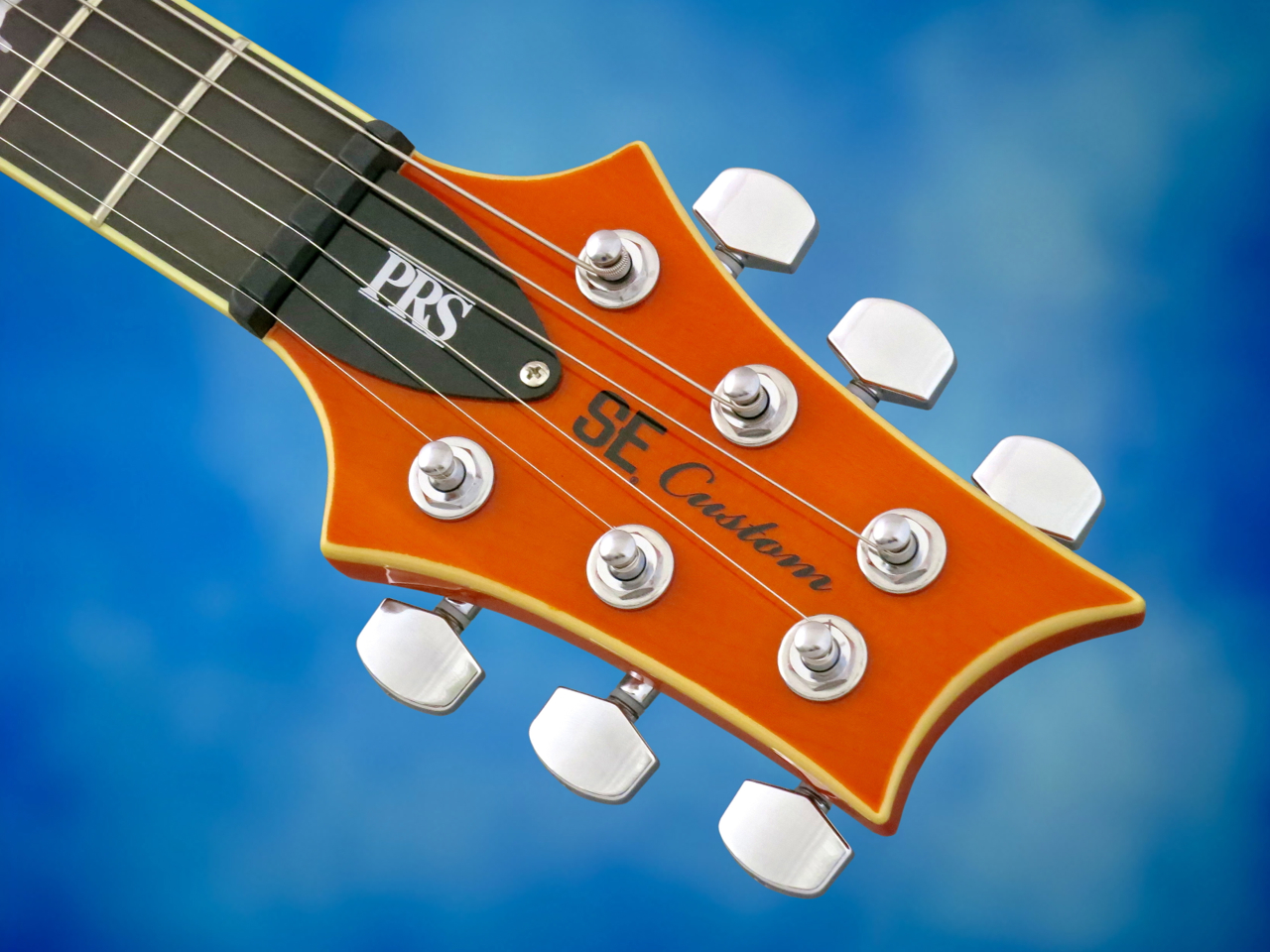
The nut is made from PRS’ special graphite-impregnated, hard plastic.
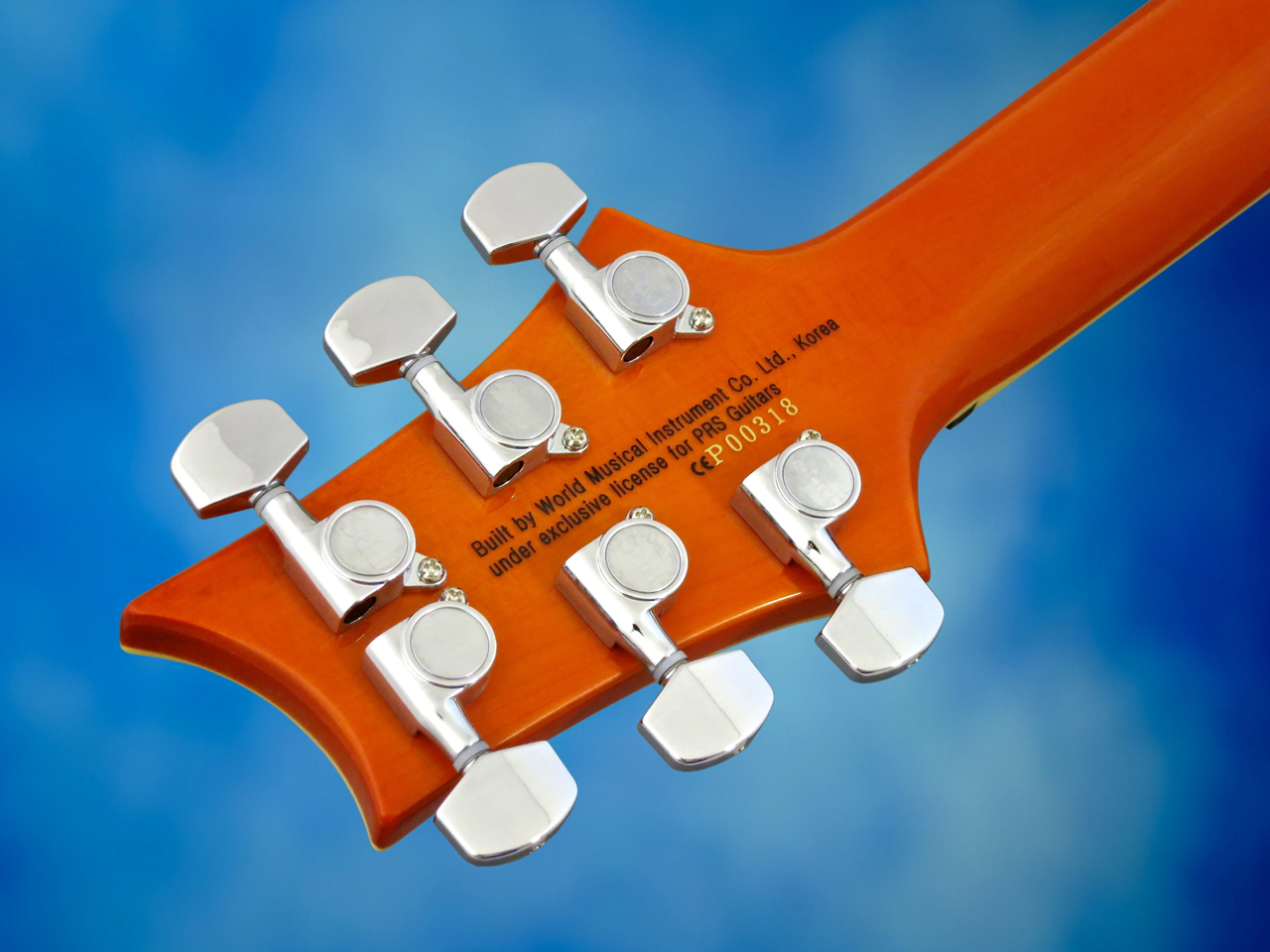
The 30th Anniversary SE Custom 24 sports a set of very decent, non-locking Schaller-copies.
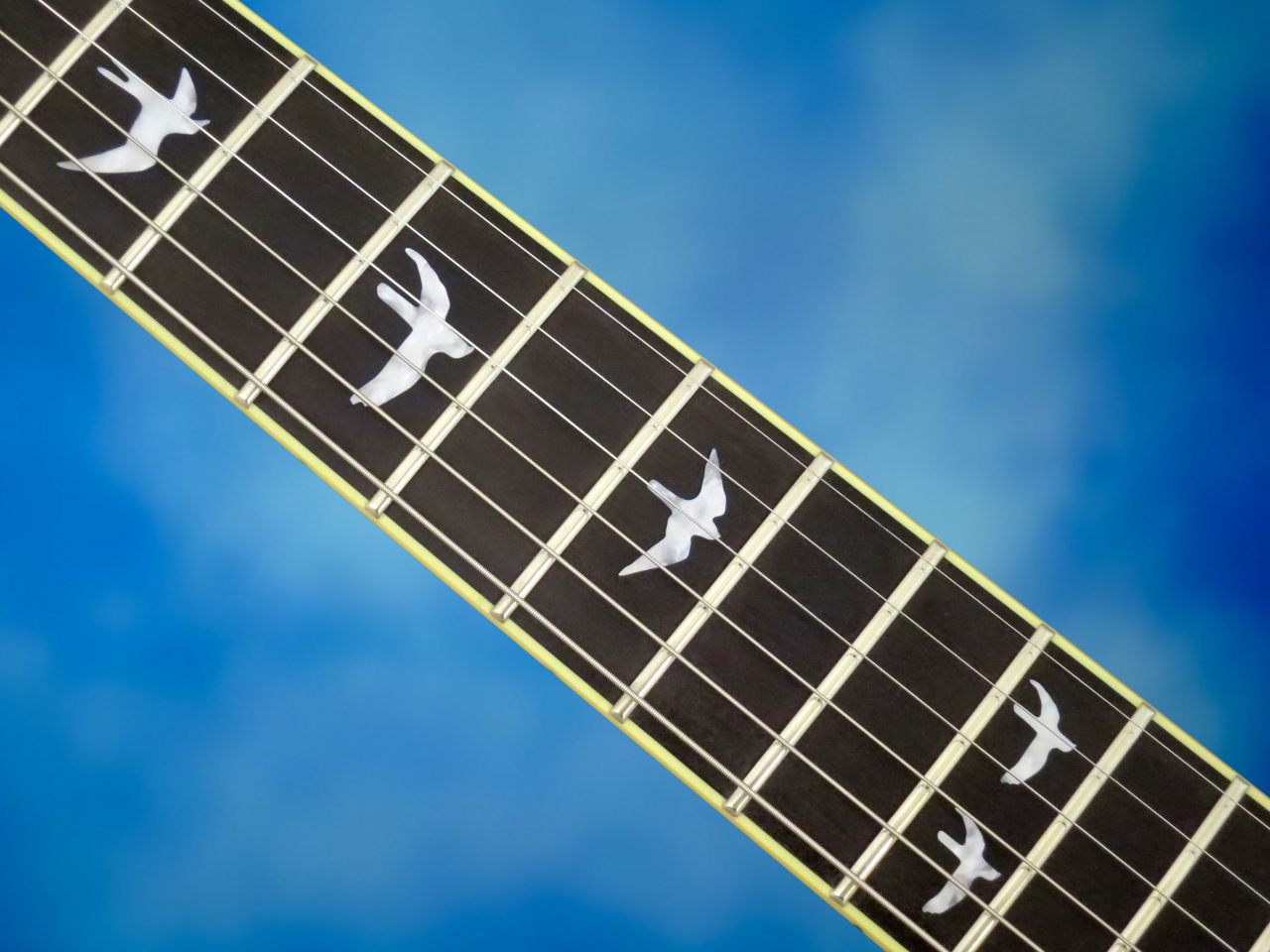
PRS have come up with a variation of their bird-inlays for the anniversary models, which sees the birds flying in a gracefully curved line across the fingerboard.
The bound rosewood fingerboard is home to 24 medium-jumbo frets. The fretjob is excellent.

The bevelled treble side cutaway has become something of a trademark for PRS guitars.
If you click on the picture for a better view, you will be able to see clearly the demarcation lines between the mahogany back, the maple top, and the flame maple veneer.
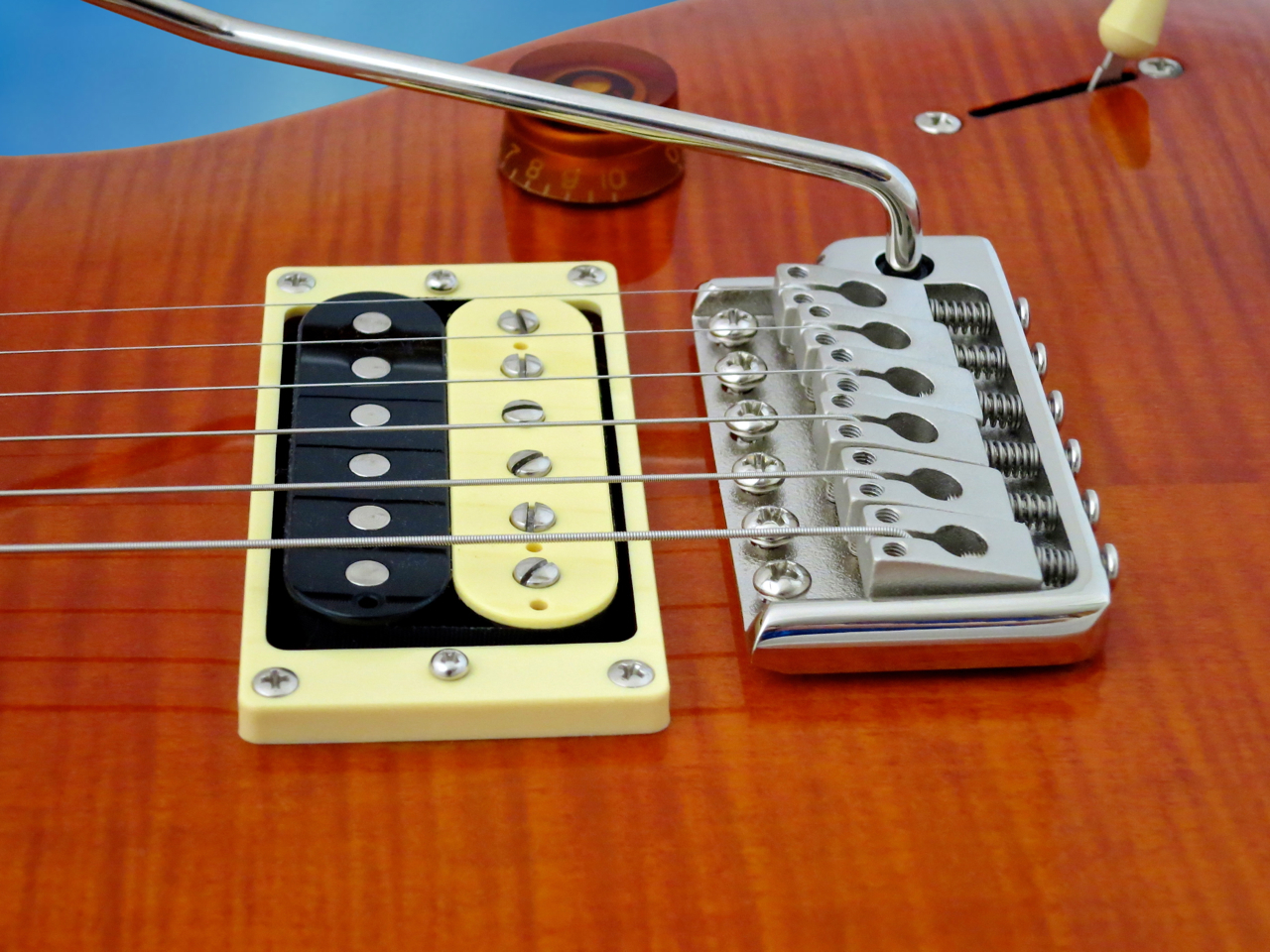
Thirty years ago locking vibratos (Floyd Rose, Kahler, Rockinger) were highly fashionable, but Paul Reed Smith wasn’t too keen on them. In his view locking systems changed a guitar’s sound in a negative way, and he felt they were too cumbersome when it came to changing strings.
Smith came up with a highly-improved take on the classic Stratocaster vibrato – a chunky piece of beauty, milled from solid brass.
The SE 30th Anniversary Custom uses a high-quality version of the original design.

In the Eighties guitarists favoured hot bridge humbuckers, because they made achieving a creamy distortion sound much easier.
This Anniversary-Custom brings this concept back by combining a medium-output neck humbucker – the Vintage Bass – with the SE-version of the high-output HFS Treble (HFS = hot fat screams).

In the beginning, original PRS Custom 24 models came with two “controls” and a mini-toggle switch. Actually, the second “control” was a five-way rotary switch that served as the guitar’s pickup selector. The tiny switch was PRS’ Sweet Switch, a preset treble roll-off.
Over the years, the rotary switch fell out of favour, and the control setup on US-made guitars changed to master volume, master tone, and a five-way blade switch.
On the SE Custom 24 the blade switch is a three-way model, while a push/pull switch in the tone control allows you to split both humbuckers.
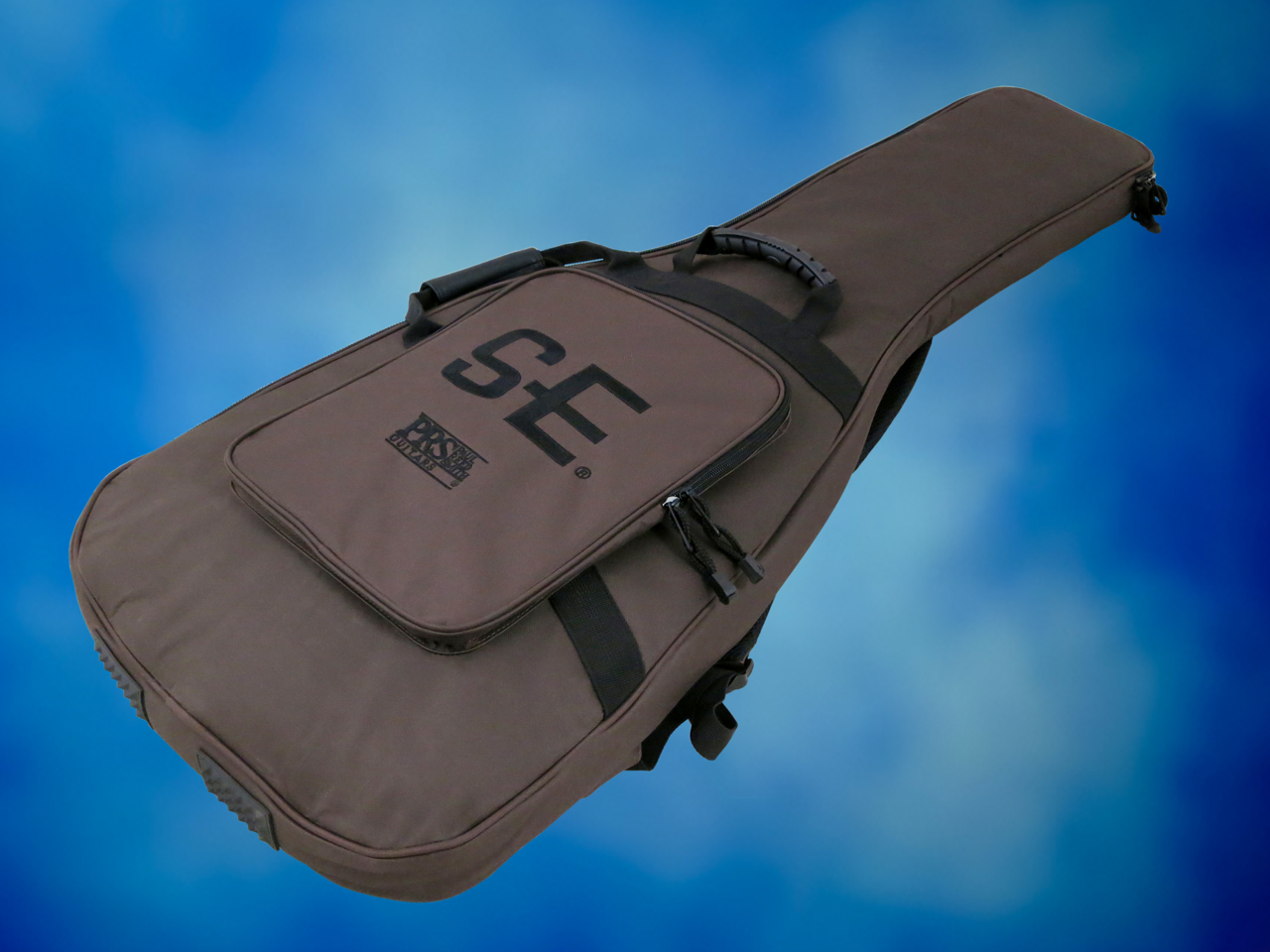
A well-made gig bag is included with the SE Custom 24 30th Anniversary model.
****
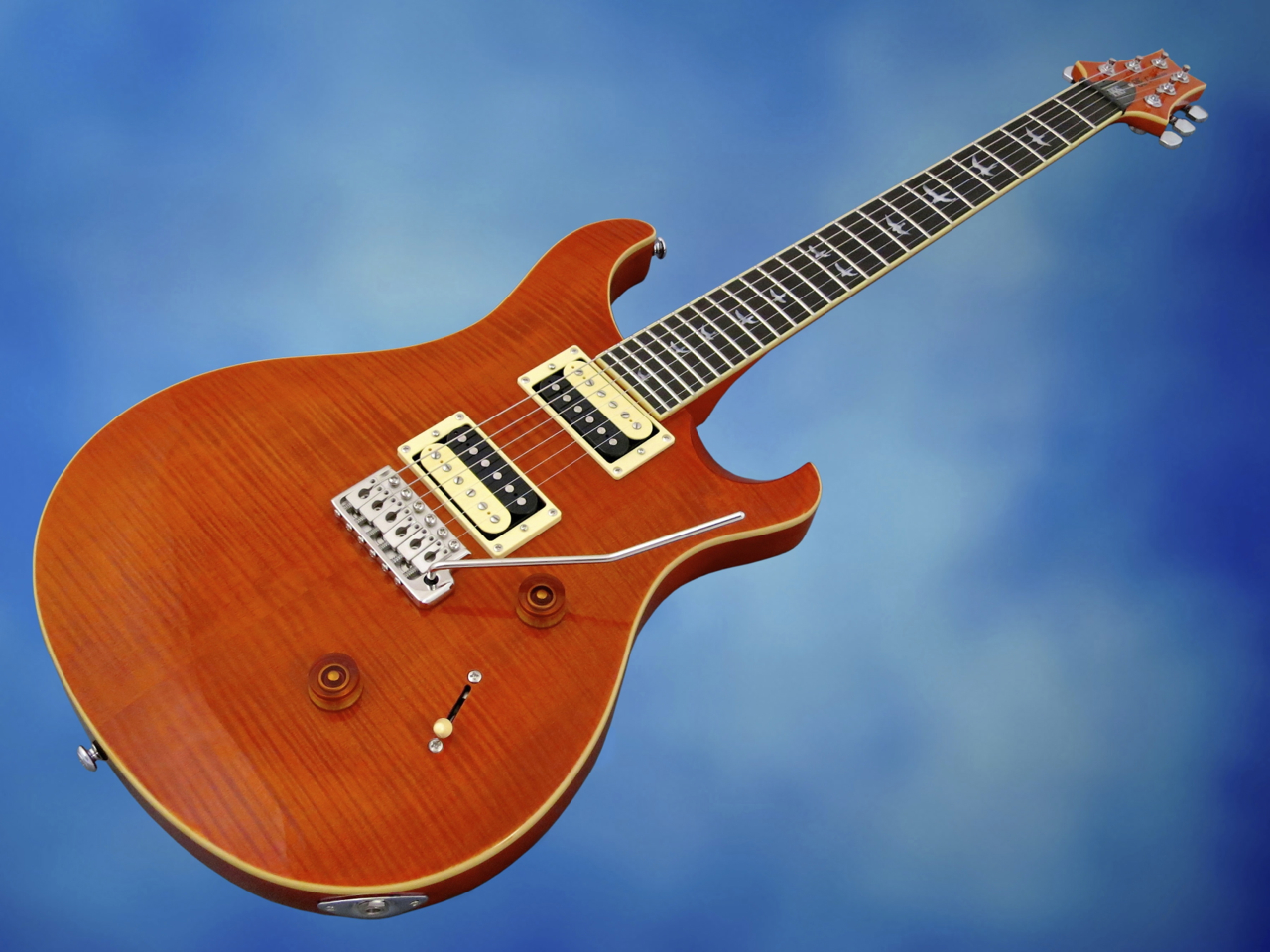
PRS guitars are known for their well though-out ergonomics and their great playability, and the SE Custom 24 30th Anniversary proves to be a genuine PRS in this respect, too. It has a comfortable medium weight, and feel nice both in your lap and strapped on.
In keeping with the 1980s theme, the SE comes with a Wide Thin neck profile. Despite its name, though, you needn’t be afraid that this Custom 24 comes with an insubstantial Ibanez Wizard. I’d describe the Wide Thin profile as distinctly oval with a medium thickness, so there’s still more than enough wood left for good tone and sustain.
The review guitar came with a comfortably low setup (low-E: 1.9 mm/high-e: 1.6 mm) without any buzzes, thanks to the great fret job.
I know that it’s a thing of personal preference, but I’d like to see a PRS strung up with a set of 010-gauge strings, instead of the factory set of 009s. The factory set feels almost too “slinky”and effortless, making it hard to really dig into the strings.
The PRS-vibrato is one of the best updates of the vintage vibrato you’re likely to encouter, and it works like a dream on the SE Custom 24, too. The feel is smooth, creamy and precise, but isn’t as sensitive to heavy-handed playing or string bending as a Floyd Rose, despite the floating setup.
Paul Reed Smith has also proven he know’s how to voice pickups. Naturally, these Korean pickups aren’t quite in the same league as their American counterparts, but these are still very decent pickups.
On paper, pairing a Vintage Bass with a HFS Treble humbucker sounds like a recipe for a slightly schizophrenic sound, when, actually, these pickups work very well together. The jump in output levels isn’t as acute as you might think. The difference between the Vintage Bass and the HFS Treble comes over clearest in the way the latter focusses heavily on the mid-range frequencies.
The sound clips both start with the coil-split on, before moving on to the full humbucker sound. The sequence is always neck pickup –> both pickups –> bridge pickup:
The rhythm guitars on the demo track use the coil-split (left channel: neck PU; right channel: both PUs), while the lead guitar starts with the full neck humbucker, before switching to the full bridge humbucker at 0’49”:

****

No wonder that PRS Guitars’ SE-range is so popular:
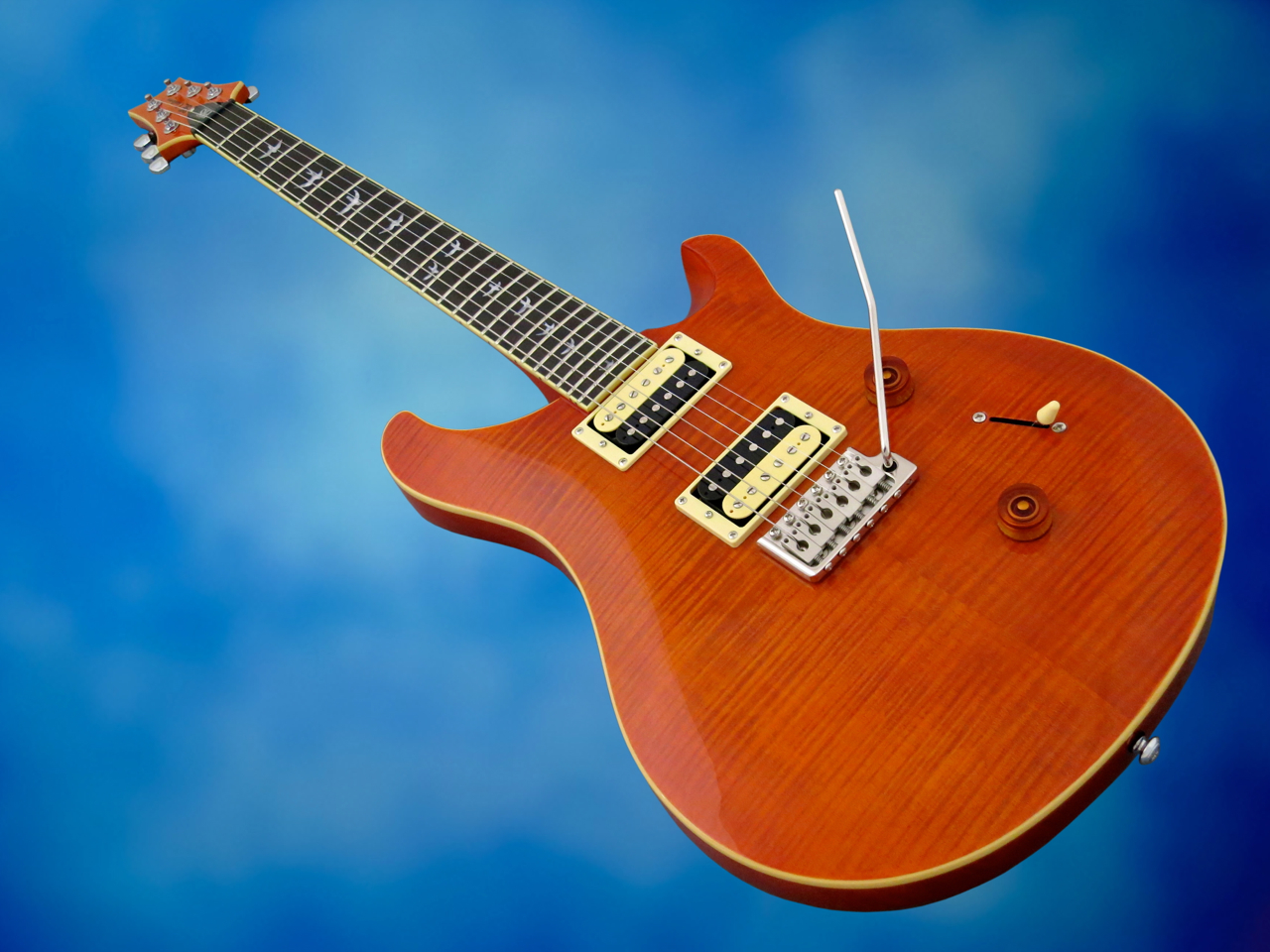
The SE Custom 24 30th Anniversary gives you the genuine “PRS experience” at a truly fair price. This is a pro-level electric guitar that plays very well and offers you a wide variety oif different sounds.
****
PRS SE Custom 24 30th Anniversary
approximately 1,000 € (including gig bag)
Finnish distributor: EM Nordic
A big thank you to DLX Music Helsinki for the loan of the review instrument!
****
Pros:
+ workmanship
+ playability
+ vibrato action
+ versatile sound
+ anniversary model
Review: Boss DD-500

The brand-new Boss DD-500 will quite likely prove to be a definite milestone in the effect company’s history. Boss’ newest creation isn’t just another run-of-the-mill delay pedal; instead, the company’s R&D-department has set out to create a genuine “mother of all delay pedals”, aiming to take the user all the way, from the illustrious past of echoes and delays right into the here-and-now of top notch audio processing.
****

The Boss DD-500 (current street price in Finland approx. 370 €) comes over as a very matter-of-fact, businesslike pedal with a very clean and uncluttered look.
Despite the fact that each effect patch contains quite a number of different adjustable parameters, Boss have provided the user with physical knobs and buttons to access the most important features directly. In addition to the all-important Delay Mode selector, you’ll find controls for Time, Feedback, Effect Level, Tone, and Modulation Depth. This makes tweaking any patch very fast and easy.
The Model-selector goes right to the heart of what the DD-500 does, offering you access to the different delay types on offer. The DD-500’s twelve Modes really run the whole gamut of all delay types known to mankind, starting with a state-of-the-art, contemporary delay (Standard) and leading you all the way to some of the best digital models of tape- and bucket brigade-delays you’re likely to hear. Let’s not forget about the more special delay types on offer here, such as Boss’ own Tera Echo Mode, Shimmer, Slow Attack, or Reverse. The outlandishly bit-crunching SFX setting, as well as the fat and chewy Filter Mode will take your playing closer to the realms of synthesizers and Electronica. Depending on the chosen mode, the maximum delay time on offer stretches to a whopping ten seconds!
Naturally, the DD-500 also comes with a phrase looper, which can loop up to two minutes of audio.

The Boss DD-500 will work equally well in mono or stereo setups.
The Control/Expression-jack lets you hook up an additional (double) footswitch unit or an expression pedal (not included) to the delay unit, allowing for real-time control of almost any parameter(s) you choose.
You can use MIDI to synchronise your delays to an outside source (such as an audio sequencer), as well as for remote effect patch switching.
The DD-500’s USB-port can handle both MIDI data, as well as digital audio, making it easy to record your effected guitar signal straight into your sequencer.
The Boss DD-500 offers plenty of memory space for effect patches:
Set to factory specifications, the delay unit will give you access to 99 banks of two patches each (A & B), that you can turn on and off using the switches of the same name. In this configuration the third switch is set aside for tap tempo and parameter control duties. You can change the factory configuration, though, which makes it possible to use 99 banks of three patches each (A, B & C). And if you’re really adventurous, you can also choose a setting that lets you use two delay patches simultaneously.
The Boss DD-500 can be run as a true bypass-effect, meaning that the input signal goes straight to the unit’s output, whenever the delay is turned off. If you have a long effect chain, or if you’re forced to run long cables to your backline, you will appreciate the delay’s buffered output option, too, which will keep all your precious trebles and dynamic content intact.
****

Boss’ internal digital signal processing, with a sample rate of 98 kHz and a 32-bit resolution, lays the perfect groundwork for the DD-500’s excellent audio quality and amazing versatility. This isn’t your daddy’s delay box, where you can only set the delay time, feedback, and effect level; the DD-500 allows you to delve very deep to hone your tone in exactly the way you want. For example, all Delay Modes come with their dedicated semiparametric EQ, a comprehensive modulation section, and a ducking compressor.
Adding the possibilities offered by the CTL-switch – or additional switches, or an expression pedal – into the mix, further multiplies the tonal options on tap in the DD-500. If you don’t need the tap tempo function, you can use the built-in CTL-switch for special effects, such as – among others – Hold (the repeats don’t fade away, while the footswitch is pressed), Warp (basically a modern version of tape-spin; your delay running wild) or different types of Roll (changing the note value of your delay).
Yes, there is a long list of different parameters that you can tweak, but the DD-500 is still surprisingly easy to use. Despite the fact that this unit is much more versatile than a simple analogue delay, making your own delay patches is still relatively simple.
In my opinion, the new Boss DD-500 is the best and most versatile delay pedal available today.
Even used “straight” – that is without further modulation or filtering – the basic Delay Modes sound great, offering you the widest possible scope to take you on a sonic journey par excellence. Here’s a short clip introducing all twelve Modes, using the same knob settings (with Modulation Depth set to zero). I start with Standard and work my way forward in a clockwise direction:
The factory patches in the DD-500 offer so many different types of delays that a review, such as this, can’t cover them all. The demo track features 12 different factory patches on the lead guitar, plus an additional patch, used to simulate a violin sound.
Here’s a mix of just the lead guitar parts:
And here’s the full track:
****

I’m pretty sure that the Boss DD-500 will put an end to many a guitarist’s epic search for the “perfect delay pedal”.
This delay unit offers you such a wealth of different sounds, delay types, and tonal options, that I probably could have spent weeks on end with the DD-500, without bumping into the outer walls of this universe of inspiration. The Boss DD-500 is an equally excellent choice for the traditional guitarist, looking for authentic versions of legendary delay sounds, as it is for the fearless sound traveller, who will draw a sheer never-ending wealth of inspiration from this device.

****
Boss DD-500
street price ca. 370 €
Contact: Roland
****
Pros:
+ value-for-money
+ 12 delay types
+ broad scope for adjustment
+ large patch memory
+ sound

Review: Tokai Classic Series
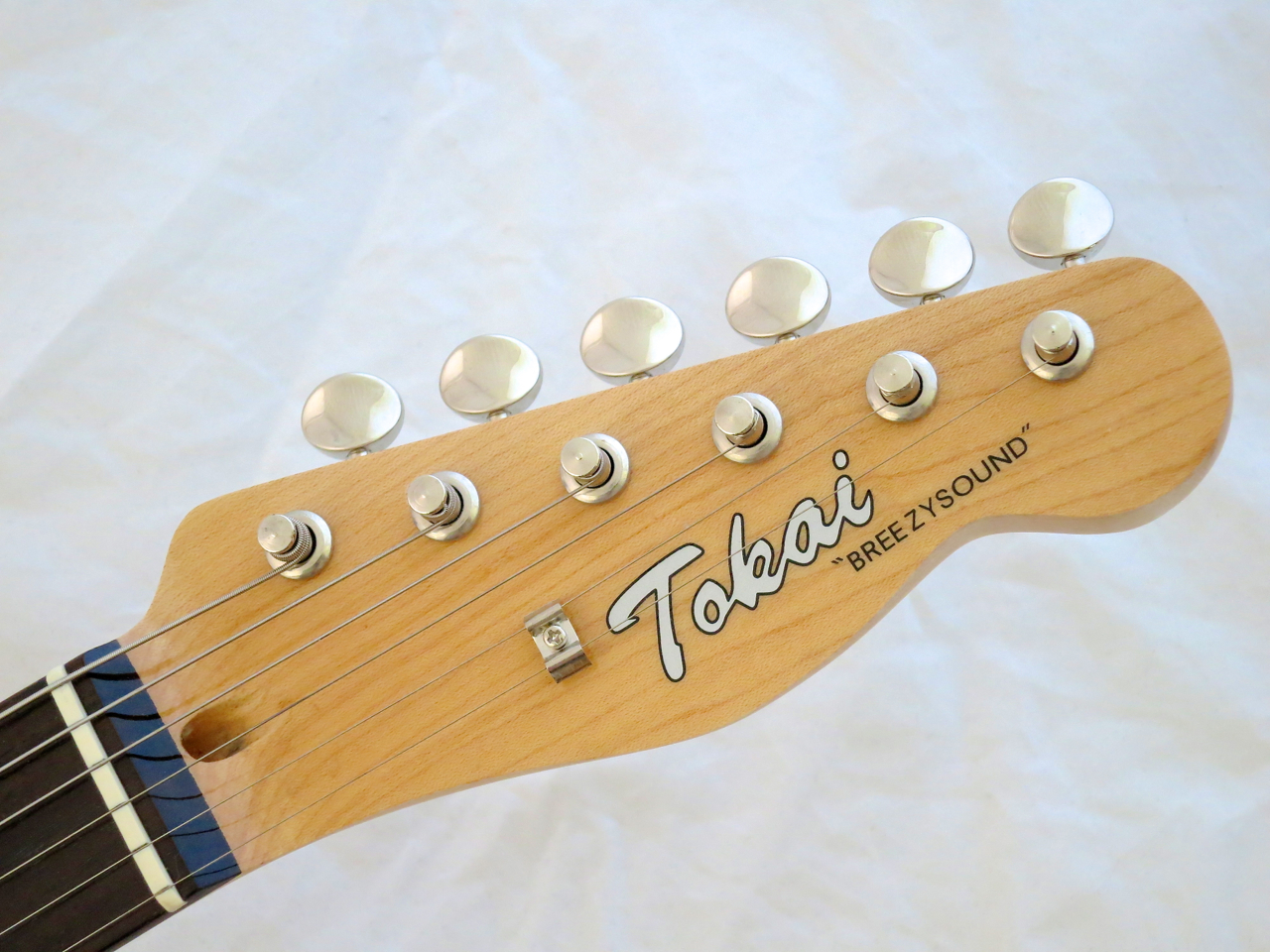
Tokai Guitars has built its reputation on very well-crafted and vintage-correct copies of classic models. The original Japanese Tokai instruments from the Seventies and Eighties gave most US manufacturers a good run for their money, and in some respects Tokai’s – ahem – “versions” were even better than some of the originals from that era.
Tokai’s top-of-the-line instruments are still made in Japan. The company’s Chinese output, though, makes it possible to own a genuine Tokai guitar (or bass), even on a tighter budget.
The idea behind the brand-new Tokai Classic series is to offer very reasonably priced guitars and basses, which combine a classic look with a few modern tweaks for easier playability.
****


Kitarablogi received these three Tokai Classics for review:
A Tokai Classic TE (current price in Finland: 249 €) in a 50s-style two-tone sunburst finish…
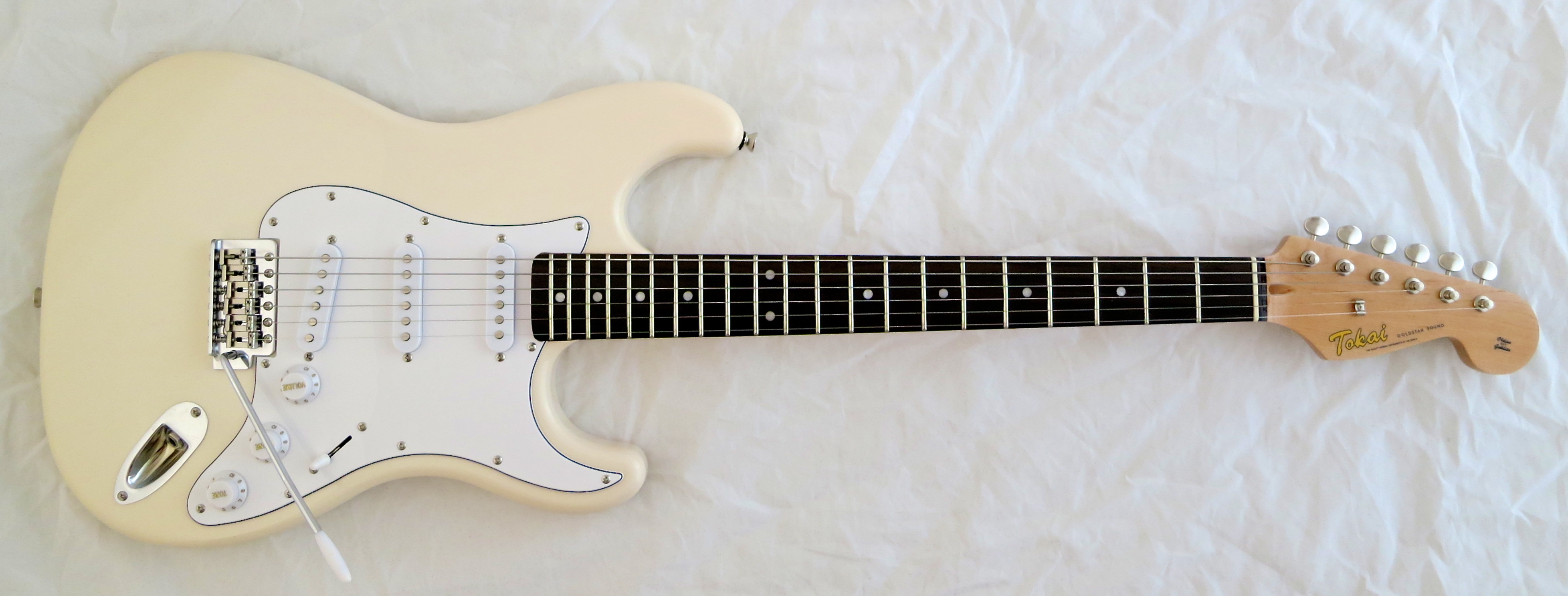

…a creamy white Tokai Classic ST (249 €)…


…as well as a Classic JB bass (299 €) in a fetching three-tone sunburst.

Tokai’s Classic series features bolt-on maple necks.
On the TE and ST models the face of the headstock sports a gloss finish.

The JB bass’ headstock front has received the same thin satin finish as the neck.
All Classic instruments offer easy access to the truss rod at the headstock, so you won’t have to take off the neck to make adjustments.

There’s a set of very decent Kluson-copies installed on the guitars.

The Classic JB comes with a set of Schaller-copies, which are less massive than vintage-style Klusons.

The Classic TE and ST come with a flatter-than-vintage fingerboard radius and chunkier frets, which makes the playing feel much more modern and bend-friendly.

The same goes for the Tokai Classic bass.

All Classic series bodies are made of basswood, a proven tonewood with a sound similar to alder.

The black plastic cushion beneath the neck plate protects the finish.

There are different versions of the three-saddle Tele-style bridge in circulation:
The Classic TE goes for the late-Sixties variety sporting three saddles with pre-set grooves for the strings.

The TE came strung the regular way, though the body, with the strings’ ball-ends anchored in ferrules. This setup is favoured by most Tele players.

Tokai’s Classic TE nevertheless offers an additional interesting feature:
It’s possible to string this guitar through the back of the bridge, too. This was a rare feature on original Fender Telecasters in 1958/59 that noticeably alters the feel and sound of the guitar.

At first glance, the bridge on Tokai’s Classic ST looks like a dead-on copy of a vintage Strat vibrato.

The vibrato block, though, isn’t as chunky as on the original. It’s about the same size as the block on a Floyd Rose vibrato.
Vintage-anoraks will sniff disapprovingly at the sight of such a block, claiming that it’s bad for the tone of the guitar. Let me tell you that the review guitar’s acoustic ring and sustain were actually quite healthy. So much for preconceptions…
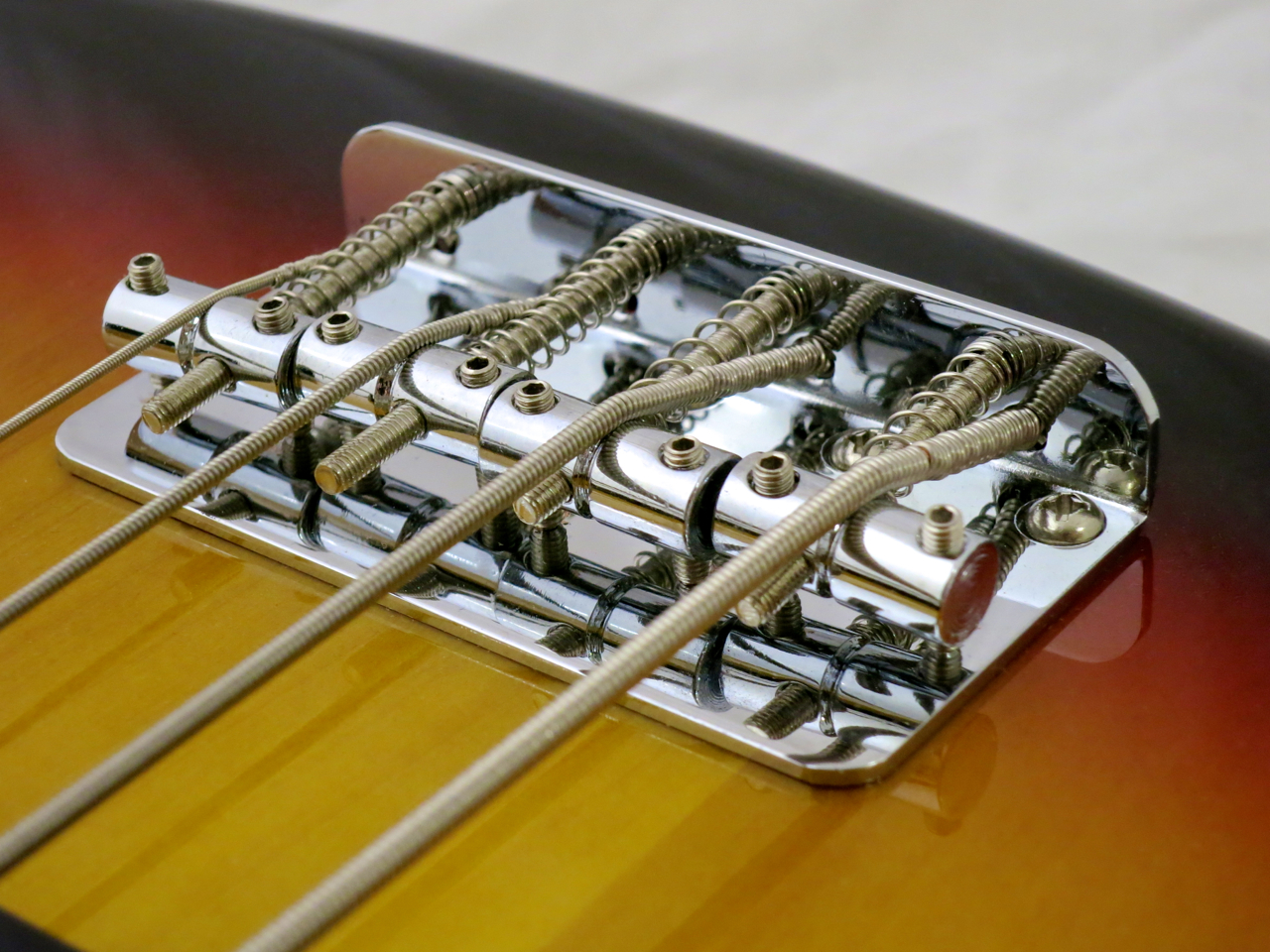
The Classic JB sports a nice copy of a 1970s Fender bass bridge.

Most self-appointed “vintage-gurus” will tell you to steer clear at all times of ceramic Fender-style singlecoils.
Traditionally, a Fender-type singlecoil is constructed from six small, cylindrical magnets, which are tapped into vulcanised fibre plates. Around this magnet core a coil of thin copper wire is wound to complete the pickup. In traditional pickups the polepieces you see are actually the top ends of the alnico magnets.

Tokai’s Classic series uses ceramic pickups, which are made a little differently. The polepieces aren’t magnets, but rather soft steel rods, which are in physical contact to a ceramic bar magnet (or sometimes two magnets) stuck to the bottom of each pickup.

When ceramic pickups first appeared on budget guitars in the Nineties, their sound was admittedly often very spiky, brittle and sharp. This gave ceramic singlecoils a bad name, which wasn’t all that undeserved.
But that was then, and ceramic pickups have been improved drastically since. Despite this, there’s still quite a lot of prejudice against this type of guitar pickup.
In the case of these Tokai Classic instruments, I’d suggest you approach their pickups with an open heart and open ears – you might be in for a positive surprise!

The Classic series features electronic parts of inexpensive, but very decent quality. All the switches and controls work fine, and without any hiccups.
As you can easily see from this picture, the workmanship is very clean in the Classic TE.

The rout for the Classic JB’s component cavity wasn’t quite as clean on our review sample. Luckily, this has no bearing whatsoever on the functionality of this bass guitar.
****

Tokai’s Classic TE is a very nice, well-playing Tele-style electric guitar.
Quite often, you will find uninspiring, flat and generic neck profiles on instruments in this price bracket.
The Classic TE is quite an exception, as it sports a comfortable, well-rounded and chunky neck, that still manages to stay on the right side of “fat”. The fretwork is really great on our review sample. Combined with the bigger frets and flatter fretboard radius, this results in a slinky and bend-friendly playing feel.
Tokai’s Classic TE is no slouch in the sound department, either:
The neck pickup is warm and round, but never sounds boring or one-dimensional. The middle position of the switch will give you a cool, funky rhythm tone. The bridge pickup on its own offers enough twang for Country playing, and enough whack for the Classic Rock crowd.

****

I’d never have thought an electric guitar costing only 249 € could be as utterly inspiring as this Tokai Classic ST!
The neck feels great with its oval C-profile. The fretwork and setup make this a real player’s guitar. The vibrato works well in a vintage-style way, and the ST’s acoustic tone is woody and dynamic.
The ceramic pickups on the Tokai Classic ST are a bit hotter than the alnicos on my 50s-style Fender Stratocaster reissue. They also have a bit more sizzle and bite, but in a good way, making this more of a “Jimi Hendrix” than a “Buddy Holly” guitar.

****

Tokai’s Classic JB truly offers a lot of bass in a very pocket-friendly package.
The Classic JB will give you all the features you’d look for in a Jazz Bass-type instrument:
There’s the slender, distinctly tapered neck profile, the comfortable balance, and the wide variety (for a passive bass) of different sounds.

This last clip lets you listen to the video’s bass and guitar tracks in isolation. During the first half all guitar tracks are played on the Classic TE, in the second half the Classic ST takes over:
****


Tokai’s Classic Series may well prove to set a new standard for vintage-style instruments in this price range. The three reviewed guitars were well-made, well-playing instruments, and their sound was inspiring.
While the Classic series is aimed mainly at beginners, I wouldn’t be surprised if some of the instruments crept up on pub or club stages!
****
Tokai Classic Series
Tokai Classic TE – 249 €
Tokai Classic ST – 249 €
Tokai Classic JB – 299 €
Finnish distributor: Musamaailma
****
Pros:
+ value-for-money
+ playability
+ workmanship
+ sound

Review: Ogre Magnox-M1

There was this strange booth at Frankfurt Musikmesse 2015 that had everybody stop and take notice:
A company called Ogre displayed a variety of very goth-looking effect pedals, but the real show-stopper was a medieval-looking electric guitar made completely out of magnesium alloy, called the Magnox-M1.
Thanks to Finnish distributor R-Jam Group we were able to take a closer look at this intriguing new concept.
****

The all-metal Ogre Magnox-M1 (current price in Finland: 1,399 €) truly is a sight to behold. It isn’t often you get to see an instrument that looks like old metal, and which features beautiful rose-and-thorns reliefs on its body.

The twin-cutaway Ogre Magnox-M1 has a scale of 25.5 inches (64.8 cm), and its thin body is partly hollow.
Our two review instruments both come with a pair of humbuckers, but there’s also an HSS-loaded Magnox-M1 available.

The back of the body sports a deep ribcage bevel.

The output jack sits in its own recess.

The top nut is also made from magnesium alloy. Even though it looks a bit like a locking nut, the strings aren’t locked.

Ogre go for top-drawer quality in the tuner department by using Sperzel locking tuners equipped with Ogre’s own metal tuner buttons.

The pewter-coloured Magnox-M1 sports black dot markers.

The position markers on the bronze-coloured Ogre are golden.
The Magnox comes with 22 medium jumbo frets.

Ogre’s neck joint is very smooth, so you can widdle your way up to the dusty end with ease.

The wraparound bridge is Ogre’s own design, its base cast from the same metal alloy as the rest of the guitar.

Twin-humbucker equipped Magnox-M1 models are available with two different sets of pickups:
In our case, the pewter Ogre sports a pair of the company’s own PAF-style ‘buckers.

The bronze-coloured Magnox comes with a Seymour Duncan ’59 at the neck, and a JB model at the bridge.

These Ogres are equipped with a three-way toggle switch, as well as master volume and tone controls. There’s a push/pull-switch hidden in the master tone control, which allows you to split the humbuckers for singlecoil tones.

A close look under the hood reveals quality parts and clean workmanship.

A fancy graphite-composite hard case is included in the price.
****

Thanks to its semi-hollow body the Ogre Magnox-M1 only weighs a very comfortable 3.8 kg. Despite the fact that the neck and fingerboard are not hollowed out, the M1 stays perfectly balanced .
Ogre’s expertise in the finishing department is really something else:
Both guitars look old, rusty, and oxidised, and some parts even look coarse and scratched, but this is all a very cool illusion conjured up by the excellent finishing job. In reality the Magnox-M1 feels very smooth and friendly, even if it’s a tad cool when pulled out of its case. The only things that are real are the beautiful reliefs on the front and back of the body (as well as on the control cavity lid), all other dings and scratches are an optical effect.
In my opinion Ogre’s not-too-chunky C-profiled neck feels really great. The fretwork is excellent, and the fretboard’s edges are comfortably smooth.

Ogre’s own PAF-style humbuckers have a very dynamic, crisp and open sound, thanks to their moderate output levels. The split-coil settings sound remarkably Fender-like.
The sound clips both feature the split humbuckers first, followed by the full humbucker settings, both starting with the neck pickup:


The Seymour Duncan set is higher in output, and the sounds have a fatter mid-range character. Played into a clean channel, the bridge humbucker can sound a bit honky at times, but using crunchy settings will make the JB model rock even harder than the Ogre bridge humbucker.
The sound clips both feature the split humbuckers first, followed by the full humbucker settings, both starting with the neck pickup:


The demo track features the pewter-hued Magnox-M1 exclusively for the first half, while all the guitar tracks in the second half have been played on the bronze Ogre model.
• rhythm guitars (split pickups) – left channel: both pickups, right channel: bridge pickup
• lead guitar – full neck humbucker

****
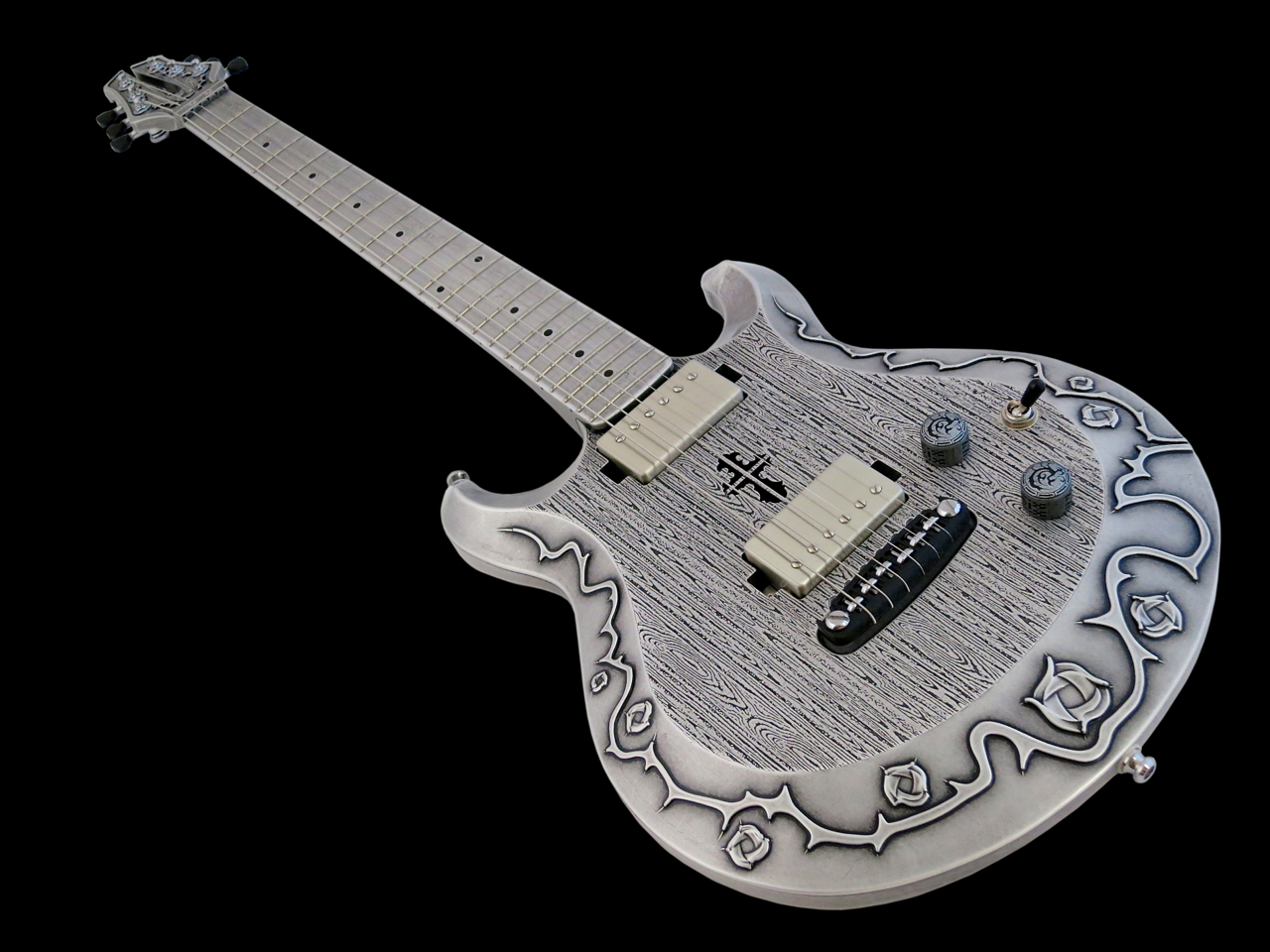
The Ogre Magnox-M1 is a very fine electric guitar, which offers a viable alternative to traditional wooden instruments. I really like the visual design of these guitars, too, but some might disagree. The best thing about the Magnox-M1 guitars, though, is the great sound they make. These are very inspiring instruments, indeed!

****
Ogre Magnox-M1
1.399 €
Finnish distributor: R-JAM Group
****
Pros:
+ cool design
+ workmanship
+ playability
+ different pickup options available
+ sound
Review: Digitech Trio


We’ve all been there, haven’t we? It’s a Wednesday evening, and you want to jam; but the drummer’s at the hairdresser’s and the bassist has to babysit all evening long.
So what do you do? You get bored to tears sitting on the sofa with your fingers widdling away idly on your favourite couch guitar…
Actually, now there’s a better, much more creative way to spend your spare time – Digitech’s brand-new Trio Band Creator pedal lets you jam and work on new song ideas by supplying an indefatigable rhythm-section-in-a-box.
****

The Digitech Trio (current street price in Finland approx. 240 €) uses a learn function that detects the chord changes (and tempo) of a part straight off your guitar’s audio signal. There’s no need for complicated step-by-step programming or an expensive (and fiddly) MIDI-pickup – just plug in your guitar lead, and you’re ready to go.
The…
View original post 548 more words
Review: Markbass Mini CMD 121P + CMD Jeff Berlin Players School
This time Kitarablogi.com takes a look at two different Markbass bass combos – one is already a bona fide classic, while the other is a brand new, affordably-priced signature model.
****

The Markbass Mini CMD 121P (current price in Finland: 799 €) is one of the company’s best-selling combos, as it manages to put all of Markbass’ trademark features into a compact, hard-to-beat package.
The Mini CMD 121P comes loaded with a lightweight, but powerful 12-inch neodymium speaker with Markbass’ cool yellow cone, as well as a piezo tweeter in the top right corner.

The back-ported cabinet is covered in a hard-wearing carpet style exterior, and comes equipped with sturdy plastic corner protectors.

The whole combo measures only 38 x 43 x 36 centimetres (w x h x d) and weighs in at just above 13 kilos, which makes it easy to carry around by its single top…
View original post 995 more words
Review: DV Mark Little Jazz + Jazz 12

Marco de Virgiliis’ company Markbass has made its mark spearheading the use of Class D power amps, which have made it possible to pack an amazing amount of output power into very small and lightweight bass amp heads. Markbass’ sister brand, DV Mark, concentrates on guitar amps, for the most part.
Markbass and DV Mark have recently changed their distributor in Finland. Their products are now distributed by Musamaailma, which celebrates its 30th year in business in 2015.
The combos in DV Mark’s Jazz series – the DV Little Jazz (current price in Finland:393 €) and the DV Jazz 12 (462 €) – are very lightweight guitar amps, meant for professional use, and designed to concentrate solely on one thing – a top grade clean tone.
****
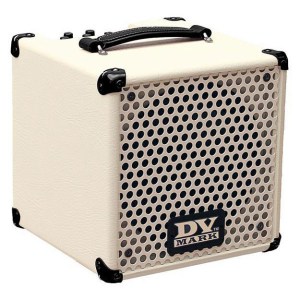
The DV Little Jazz is a surprisingly small combo in the shape of a cube…
View original post 736 more words
Review: Halla Custom Instruments SG-Style
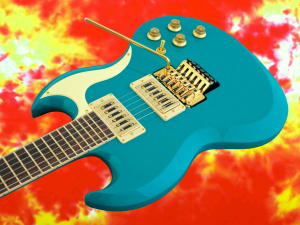
Halla Custom Instruments is one of a number of cool small instrument makers in Finland. The company is run by trained luthier-artisan Ville Mattila and specialises in one-off custom electric and acoustic string instruments. Ville Mattila is a member of the Guild of Finnish Luthiers.
Kitarablogi received a stunning Halla Custom electric for testing. The guitar may look like a tribute to the Gibson SG, but there’s more to this Halla than meets the eye!
****
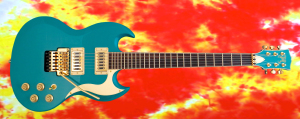
Just looking at the Halla Custom SG (price approximately 3,000 €) I had to catch my breath. This is a turquoise bombshell of a guitar, with a healthy dose of additional glitz added by the golden hardware.
But the fantastic paint job (using very hard acrylic lacquer) is only part of the story: “It’s an SG, Jim, but not as we know it!”

The Halla Custom SG fuses design aspects from…
View original post 592 more words
Review: Fender American Standard Stratocaster HSS Shawbucker

“What – yet another Stratocaster model!? Who needs another Strat? Yeah, man, I’ve noticed there’s a ‘bucker at the bridge position, but that’s been done before, hasn’t it!”
True, but this is a new American Standard model you should definitely try out, because the guys at Fender R&D have come up with a couple of nifty improvements that haven’t bee available on HSS-Strats thus far.
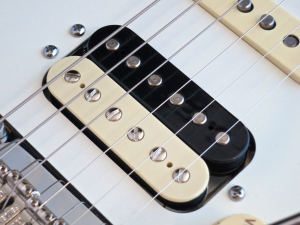
“A Shaw-what?”
Fender calls its newest bridge humbucker the Shawbucker in honour of the man who designed it, Tim Shaw. Mr Shaw is a genuine living legend, and held in high esteem amongst people in the know. In the 1970s and 80s he worked for Gibson, and helped to turn around the company’s flagging fortunes and decline in quality. As the resident electronic guru he played a pivotal role during the design of models, such as the Gibson Les Paul Heritage…
View original post 793 more words
 Gear Review Finland